Maró Guardians Get Real-Time Alerts

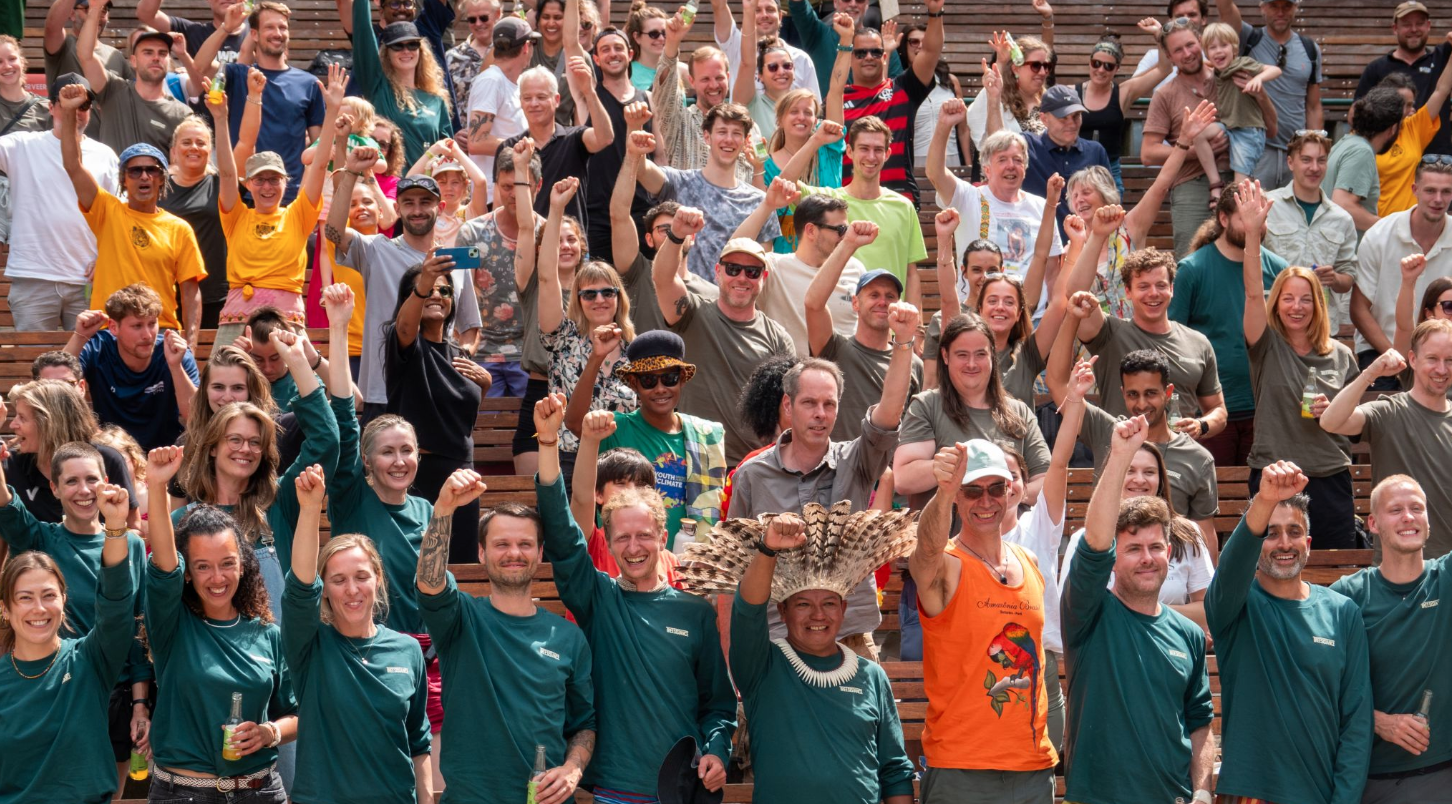
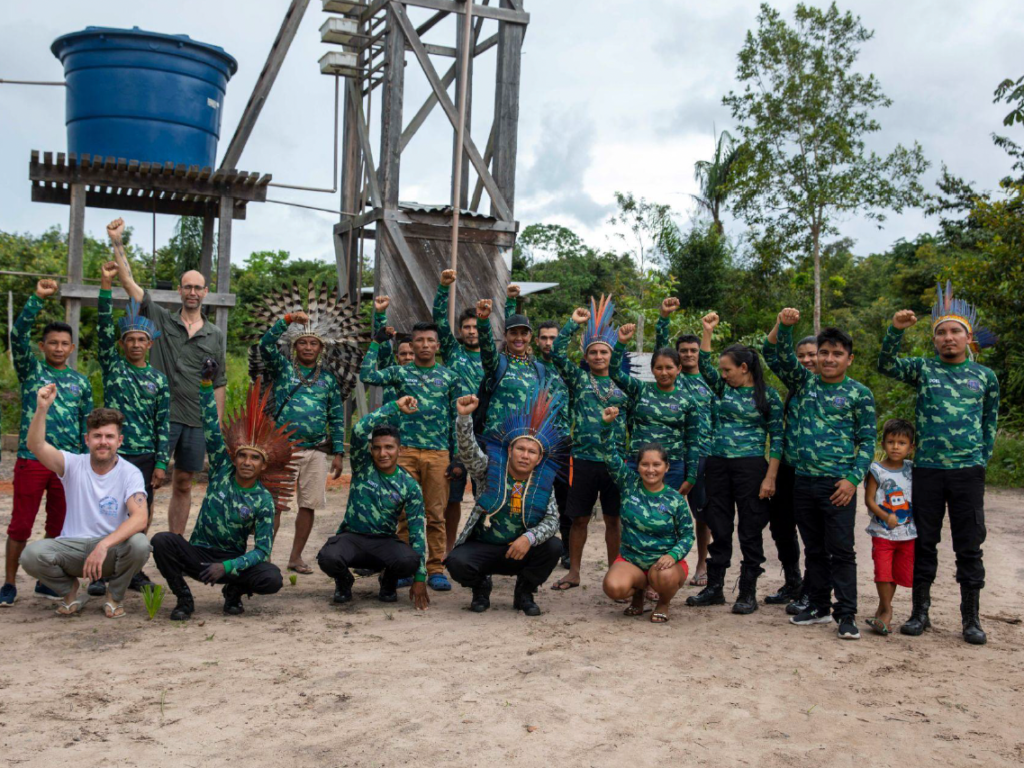
Tim van Deursen and Thijs Suijten from Hack the Planet, Wallacy Barreto and Chief Dadá from Treesistance, together with members of the Maró Forest Guardian group.

60 seconds

That is roughly how long it can now take for the Forest Guardians of the Maró Indigenous Territory to know that a vehicle, person or animal has passed one of the main access points into their forest.

In June, the Hack the Planet team travelled to Maró, in the Brazilian Amazon, to install a new generation of instant-notification camera traps together with the local Forest Guardian group. The cameras now monitor strategic access points across the territory. When they detect movement, they capture an image and send it directly to the Guardians through WhatsApp.

A vehicle, a person or even a jaguar can now be seen within moments.

Why real-time awareness matters

Indigenous territorial protection still depends heavily on patrols. The Guardians travel long distances by foot, bicycle, motorbike and boat to monitor access routes, document activity and protect their territory.

But the distances are vast, and patrols require fuel, equipment, time and careful planning. Activity can happen between patrols or at access points that are difficult to reach quickly. In a region where threats can move fast and logistics move slowly, earlier awareness can make a real difference.

The new camera system gives the Guardians an additional set of eyes in the forest. It helps them understand where activity is taking place and decide where further monitoring may be needed. It does not replace patrols or the Guardians’ knowledge of their territory. It makes both more targeted.
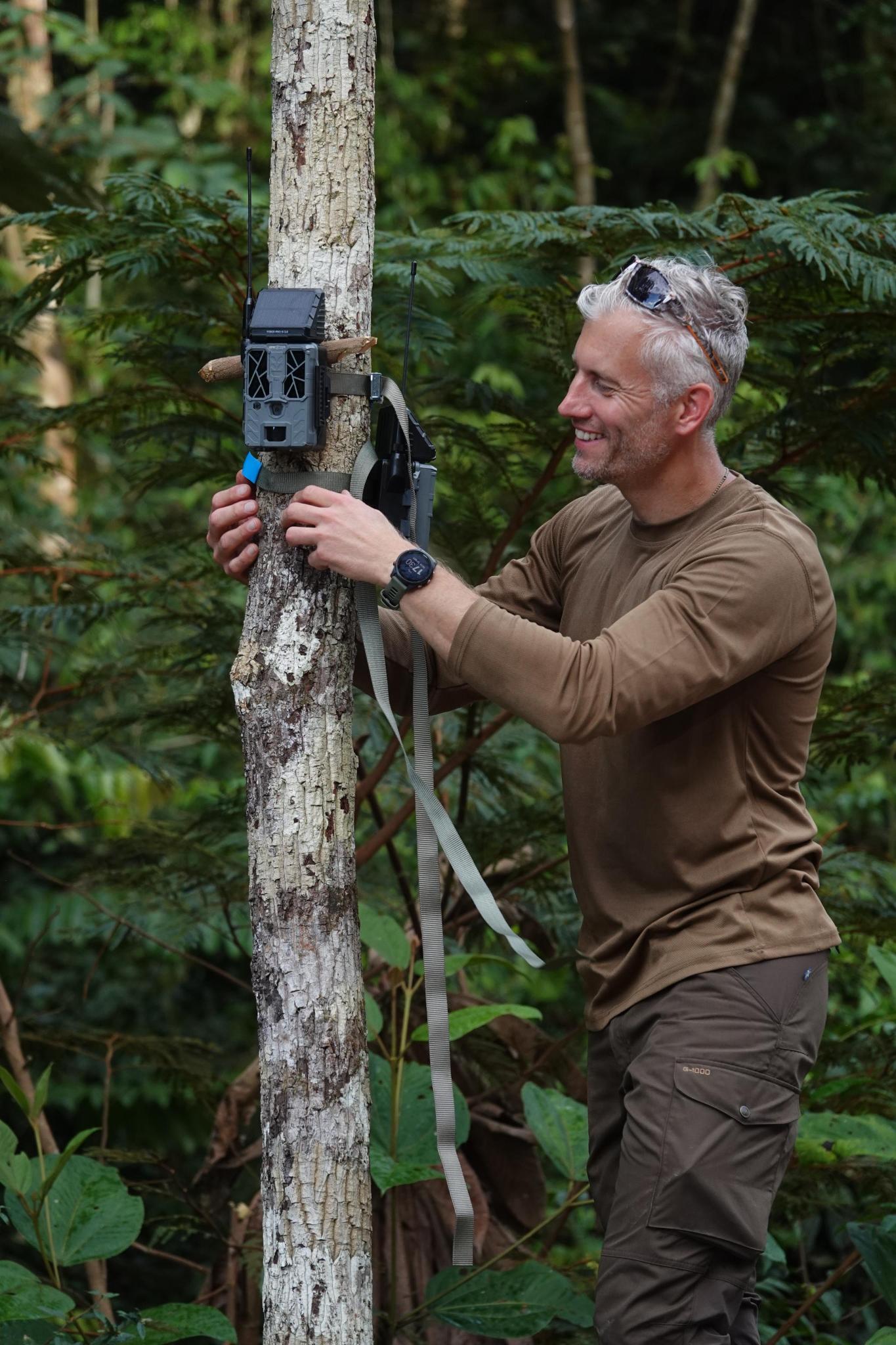
Tim van Deursen installing a forest monitoring camera in the Maró Indigenous Territory
Tim van Deursen from Hack the Planet installing an instant-notification camera trap in the Maró Indigenous Territory.

Technology in the hands of Guardians

The strength of this system is not just the camera itself, but the speed at which the information reaches the people who know the territory best.

The Guardians already use WhatsApp as part of their daily communication. They can therefore receive, view and share alerts without having to learn a new platform. Hack the Planet installed and tested the system together with the Maró Forest Guardian group. The Guardians remain in control of how they interpret the information and organise their monitoring activities.

And that is important because technology is most useful when it strengthens existing Indigenous leadership, knowledge and protection structures rather than replacing them.
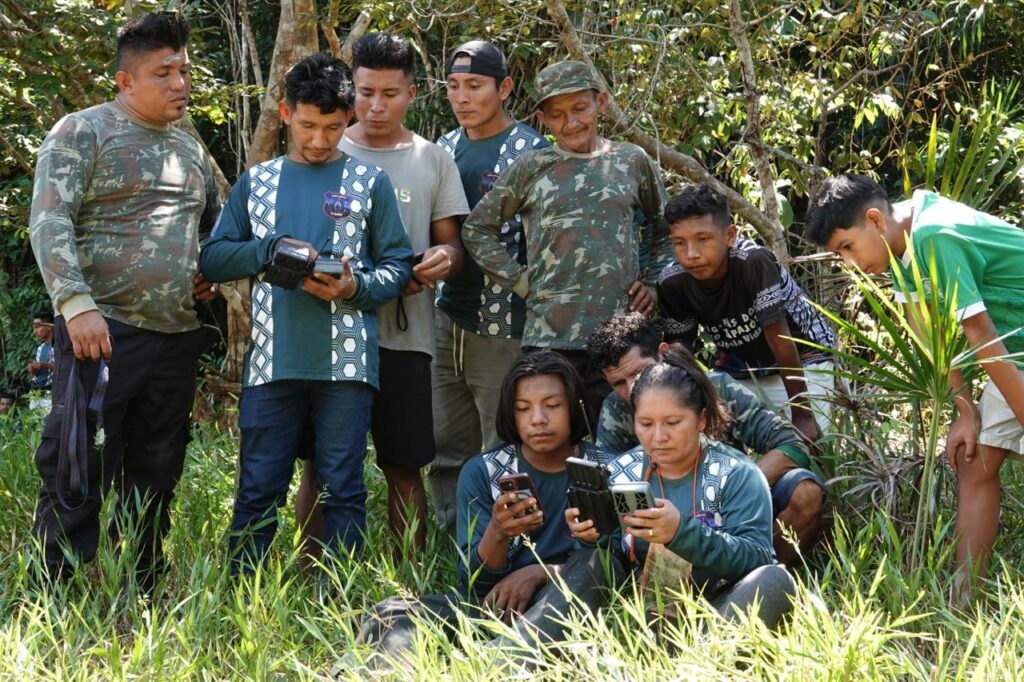
Maró Forest Guardians testing instant-notification camera traps in the Brazilian Amazon
Members of the Maró Forest Guardian group testing the new instant-notification camera system in the Maró Indigenous Territory.

A new step for Maró

The Forest Guardians of Maró have protected their territory for many years through community mobilisation, regular patrols, detailed knowledge of the forest, documentation of suspected illegal activity and engagement with law enforcement and other responsible public authorities. Over time, they have strengthened this work with tools such as GPS devices, cameras, mobile applications and satellite information.

The instant-notification camera traps are the latest addition to this evolving, community-led monitoring system. Faster information from key access points can help the Guardians decide where further monitoring is needed. It also supports more strategic patrol planning and stronger documentation in remote areas.

The project also shows how camera traps in the Amazon can support community-led monitoring without replacing patrols, territorial knowledge or the Guardians’ own decision-making.

The cameras can capture wildlife passing through these access points too, including the occasional jaguar making an unexpected appearance. Their main purpose, however, is to give the Guardians a clearer and more immediate picture of activity entering the territory.

Potential across the Amazon

We believe this type of real-time forest monitoring could become a powerful tool for Indigenous territorial protection across the Amazon.

Every territory is different, and the geography, access routes, risks and priorities must always be defined together with the communities involved. But the potential is clear: when Indigenous Guardians receive faster information, they can make better-informed decisions about how to use limited time, transport and equipment.

Treesistance and Hack the Planet are already exploring how the solution could be adapted for other territories. More soon..

Supporting Indigenous-led protection

This project shows what becomes possible when Indigenous leadership, territorial knowledge and practical technology come together. For donors and partners, supporting this work means more than funding cameras. It means strengthening the ability of Indigenous communities to monitor and protect their own territories over the long term.

The Guardians are already doing the work. Our role is to help ensure they have the tools, infrastructure and resources they need to do it safely and effectively.

Want to know more about the story behind Hack the Planet?
Co-founder Tim van Deursen shares his personal journey in the book Hack the Planet – Jezelf en de wereld verbeteren.
Guardians Unite for Justice

In May, something quietly significant happened in Santarém, Pará.

Nine Guardian groups from across the Lower Tapajós gathered with Xavante representatives who had travelled from Mato Grosso. Together, the participating communities defend more than one million hectares of forest and Indigenous territory.

Organised by Treesistance and CITA, the Indigenous Council of the Lower Tapajós and Arapiuns, the two-day meeting created space for Guardian groups to learn from one another and strengthen their direct relationship with the public institutions responsible for acting on environmental crime.

Learning across territories

The first day focused on exchange between the Guardian groups.

Although every territory faces its own circumstances, many of the challenges are shared: illegal logging, mining, land grabbing and the immense practical difficulty of monitoring large and remote areas with limited resources.

The Guardians discussed the threats they encounter, the strategies they have developed and the lessons learned through years of work in the field. By bringing groups from Pará and Mato Grosso together, the meeting allowed experiences from one territory to inform the work of another.

It also helped map shared priorities and identify where stronger coordination between Guardian groups could make their work more effective.

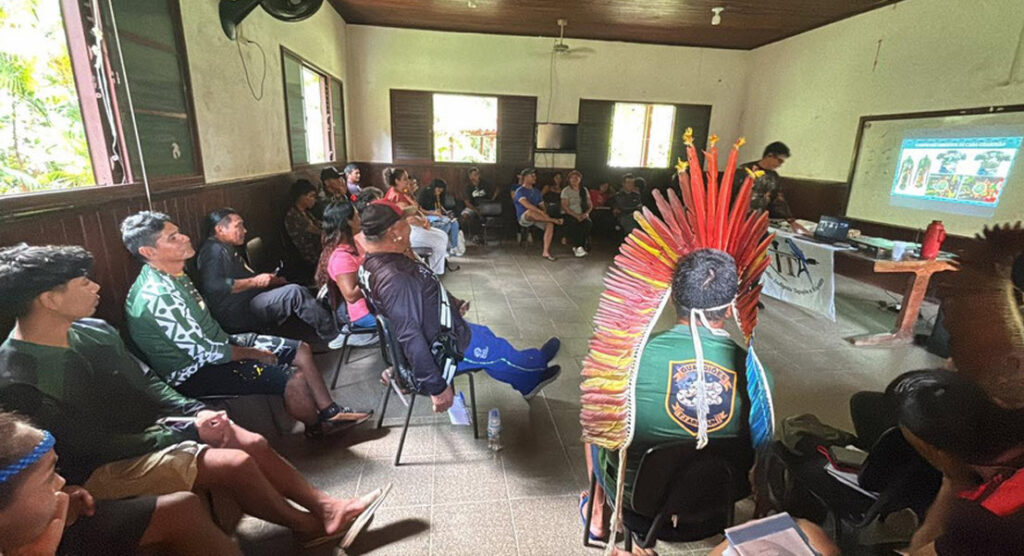
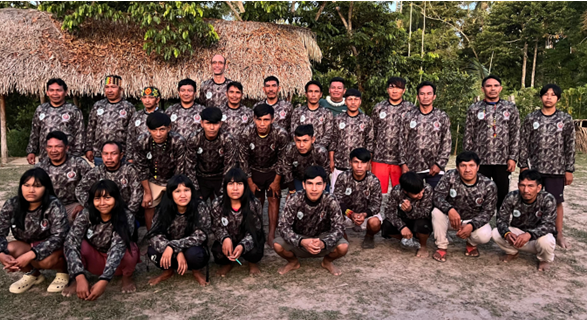
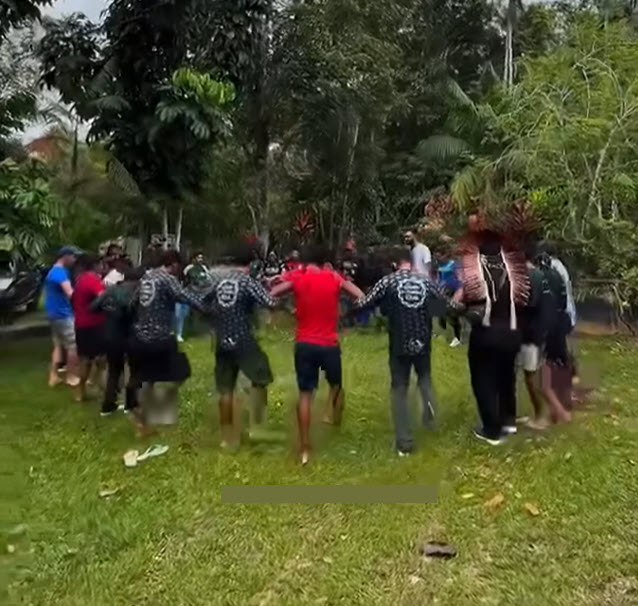
Guardian groups gathered outdoors during the two-day meeting in Santarém
Guardian groups from the Lower Tapajós and Mato Grosso during the two-day exchange in Santarém.

Bringing evidence to authorities

On the second day, the focus moved from peer exchange to institutional action. The full group met with representatives of the Pará State Public Prosecutor’s Office in Santarém to discuss how communities and prosecutors could work together more structurally.

The conversation explored how evidence of environmental crimes can be delivered, which legal mechanisms can be activated and what ongoing coordination between Guardian groups and public authorities could look like.

This is crucial because Guardian groups generate information that public institutions need. Through patrols, territorial knowledge and careful documentation, they record activity that may otherwise remain unseen: incursions into the forest, illegal extraction and changes occurring far from formal oversight.

But evidence only has an impact when there is a clear route for it to reach the right institution, and when that institution is able to act.

Making Guardian evidence count

Presentations by the Maró and Takuara Guardian groups helped demonstrate the scale and sophistication of the work already taking place across the region.

Several institutional representatives acknowledged that they had not previously understood the full scope of what the Guardian groups and their partners had developed.

The meeting made a concrete case: Indigenous and community-led Guardian groups do not simply report isolated incidents. They generate territorial intelligence that can support investigations, enforcement and legal action.

For Treesistance, this connection between monitoring in the forest and access to justice is fundamental. Supporting Guardians with equipment and training is essential, but their documentation must reach institutions that can respond.

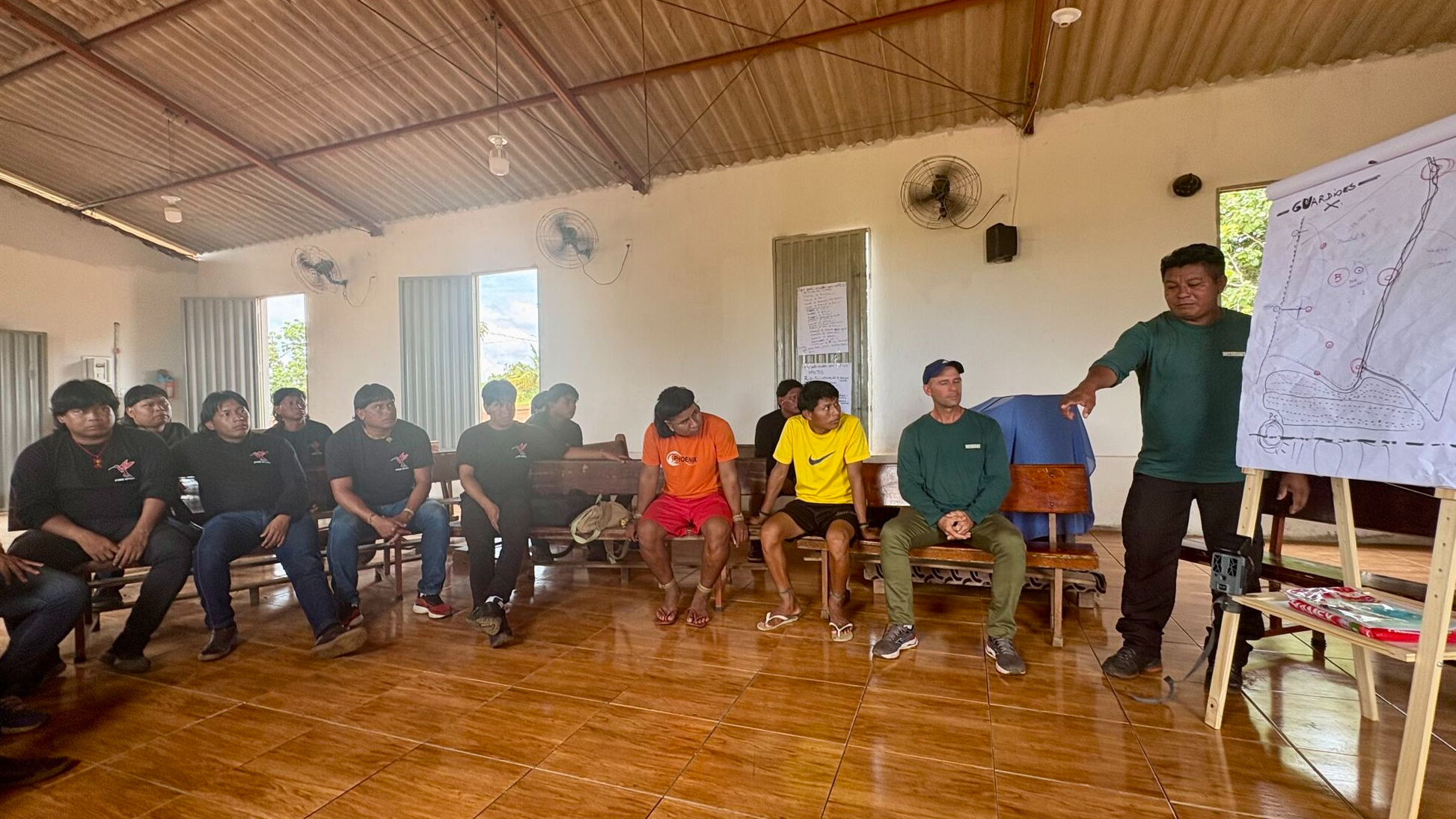
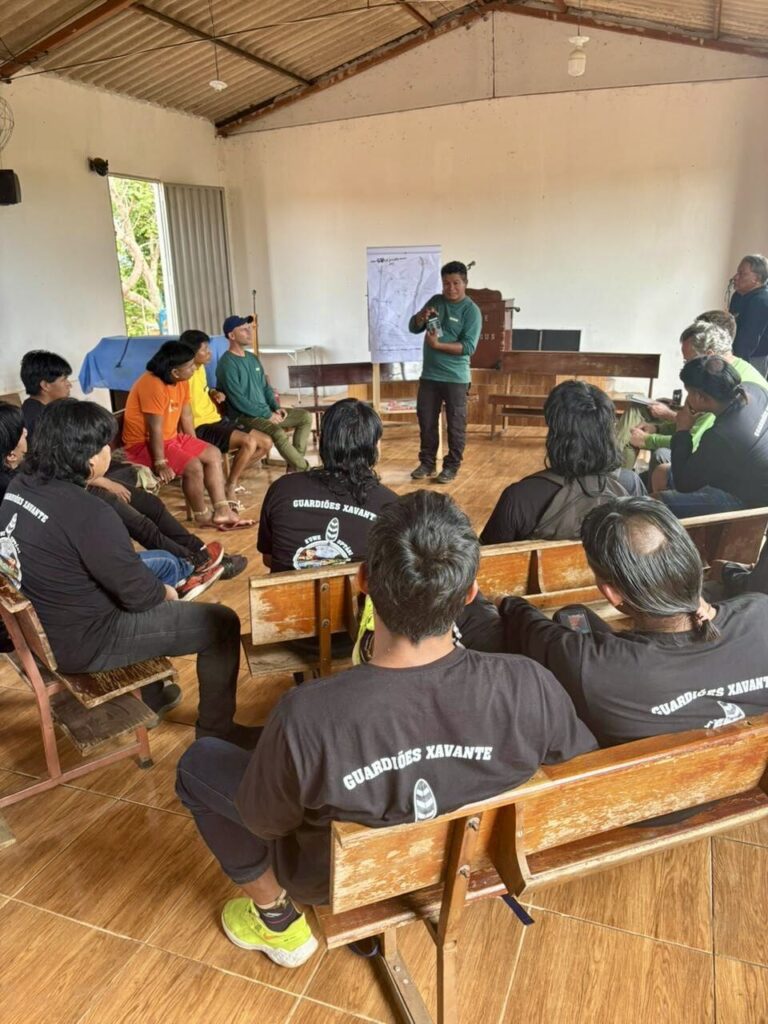
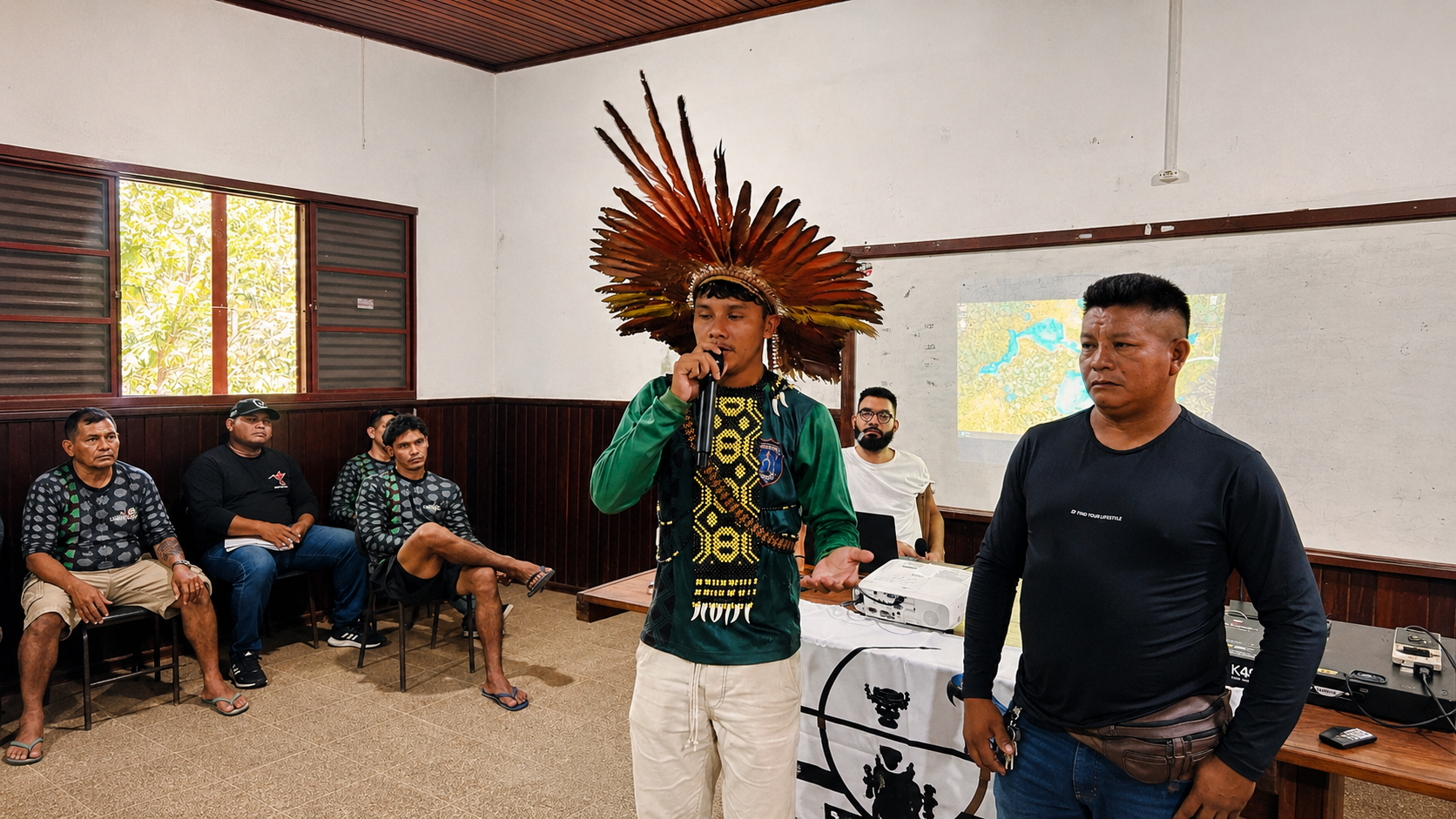
Guardian group members listening during a meeting in a classroom in Santarém
Guardian representatives listening during the two-day exchange and Public Prosecutors’ Event in Santarém.

A collective commitment

The gathering led to more than an exchange of ideas.

All participating coordinators signed a collective manifesto recognising Guardian groups as legitimate and autonomous community organisations committed to defending life, forests and the collective rights of Indigenous and traditional peoples.

The manifesto also highlighted a difficult reality: Guardian groups frequently carry out work that should be supported and guaranteed by the Brazilian state, yet they often operate without adequate institutional backing.

Their request was direct: legal, institutional and political recognition, together with permanent mechanisms for cooperation between communities, public authorities and partners committed to socio-environmental justice.

From individual groups to movement

This gathering represents an important step towards something Treesistance has been working to build for years: not only a network of Guardian groups, but a coordinated movement with the relationships needed to make community-generated evidence count.

There is still work ahead, particularly in strengthening communication and coordination between groups. But the direction is clear, and the meeting showed that there is institutional support for taking the next steps.

When Guardian groups learn from one another, speak collectively and establish direct routes to justice, their work becomes stronger and their evidence more likely to lead to action.

For donors and partners, supporting this process means investing in more than individual patrols or pieces of equipment. It means helping build the long-term structures through which Indigenous communities can protect their territories, document environmental crime and ensure that their evidence leads to action. It also means standing behind the people who return to the forest, day after day, to protect the land their communities depend on.

Logistic Upgrades in Maró

In the Maró Indigenous Territory in the Brazilian Amazon, territorial protection depends on presence. Forest Guardians need to be able to move across large and often difficult terrain, respond to threats, reach remote areas, and maintain regular patrols throughout the territory. That is why practical logistic support can make an immediate difference.

Following conversations between Chief Dadá Borarí, Head of the Treesistance Forest Guardian Programme, Treesistance, and committed funders in Europe, resources were directed toward one of the clearest needs identified by the guardians themselves: improved mobility on the ground.

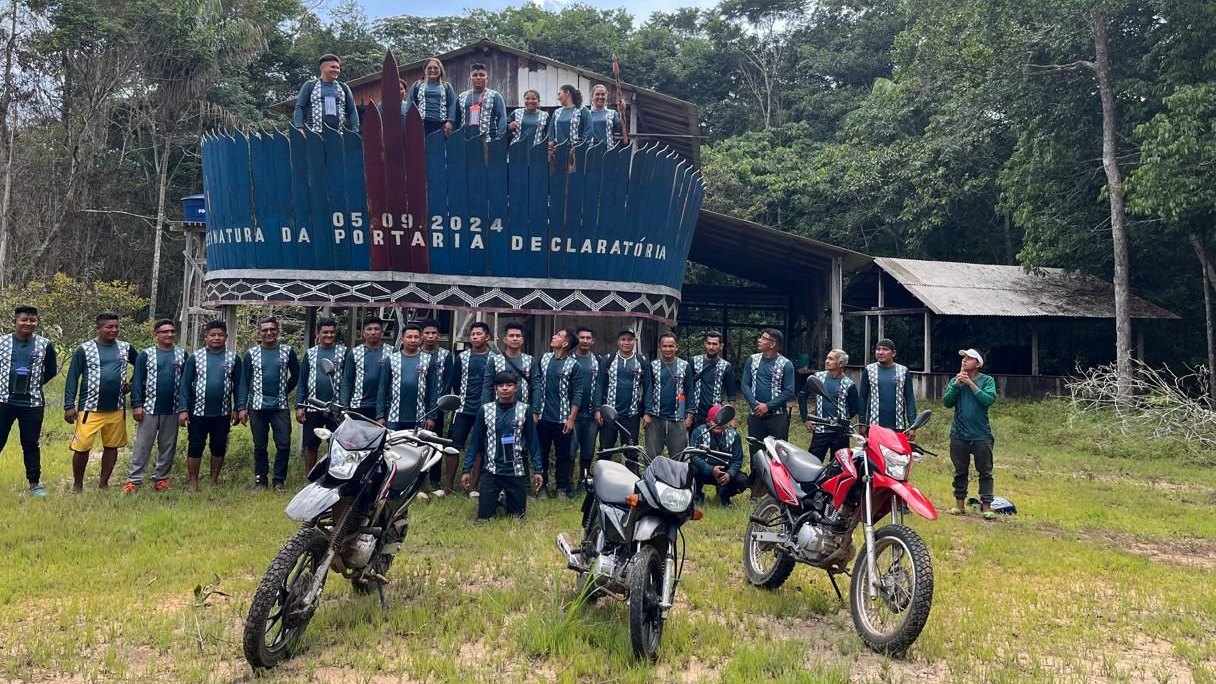
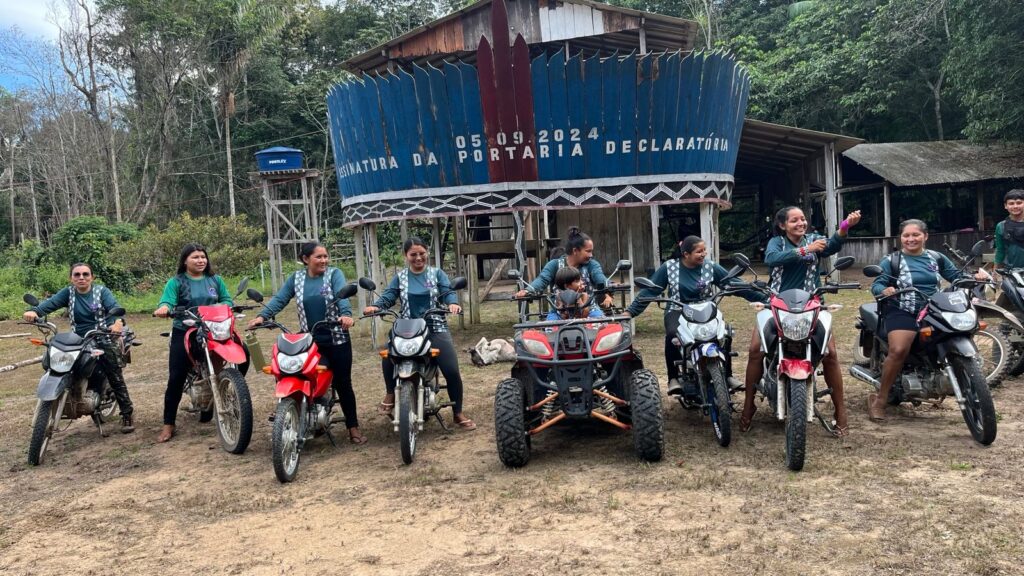
Through this support, motorbikes were purchased for the Maró Forest Guardians and are now being used on active patrols to help protect Indigenous land. Since then, Treesistance has also supported the purchase of a quad and additional bikes, further strengthening the guardians’ ability to move through the territory and coordinate their monitoring work.

These upgrades are simple, practical, and highly effective. They help guardians reach areas that would otherwise be difficult or time-consuming to access, improve response capacity, and support more consistent territorial monitoring.

The support also shows the value of direct connection between funders and the communities they are helping to resource. When needs are clearly identified by the community and funding can move efficiently toward those priorities, impact can happen quickly and visibly.

For the Maró Forest Guardians, these vehicles are not just equipment. They are part of a wider territorial protection system, supporting daily patrols, community-led monitoring, and the defence of land that has been protected by Indigenous communities for generations.

Treesistance’s role is to help ensure that Indigenous-led protection efforts receive the practical tools, infrastructure, and long-term support they need to continue.

Xavante Territory Visit

In January we were back in TI Pimentel Barbosa, in the heart of Xavante territory in Mato Grosso. Led by Chief Dadá and joined by advisory board member Marco van de Ree and Executive Director Tom Wheeler, we continued building out what a Treesistance guardian programme looks like in practice.

TI Pimentel Barbosa is one of seven Indigenous Territories of the Xavante people. Spanning around 329,000 hectares and home to 26 villages, the territory is an oasis of nature in the Cerrado, surrounded by expanding soyfields and increasing external pressure.

The Cerrado is one of the world’s most threatened biomes. Around Pimentel Barbosa, pressure from agribusiness expansion, pasture burning, illegal mining, deforestation, and escalating climate impacts continues to grow. Scientific studies have described the region as one of the areas with the highest annual fire activity globally, showing the scale of the challenge facing both the territory and the people who protect it.

Treesistance has been working alongside the Xavante since 2024, supporting organisational strengthening, local guardianship systems, fire-management strategies, and early-warning capacities. The collaboration builds on the decades-long relationship between Dutch biologist Frans Leeuwenberg and the Xavante, and began with a first Forest Guardian training led by Chief Dadá Borarí.

Since then, Treesistance has supported multiple assemblies and trainings, helping to foster collaboration among the villages and equip local teams with the tools and technology needed to monitor and protect their land.

During the January visit, the team saw the progress made since the start of the collaboration. A central guardian base has now been established, creating an operational heart for a wider territory-wide monitoring system. From this base, four guardian groups are being organised to protect different zones of the territory.

The programme is also introducing practical monitoring tools, including drones, camera traps, and other technology that can help guardians extend their reach deeper into the territory. These tools support the collection of information, strengthen the evidence base, and help connect traditional knowledge with modern monitoring methods.

For Treesistance, this work is not a short-term intervention. It is a multi-year commitment built on trust, learning, and co-creation. Every guardian programme is different, and the strength of the model lies in co-designing support with the communities themselves, based on their needs, priorities, and lived experience of defending their land.

The work happening now in Xavante territory lays foundations for generations to come: strengthening territorial defence, supporting cultural continuity, and helping safeguard a region whose ecological health is vital not only to the Xavante, but to the wider world.

2025: A Year of Impact

Tim and Dadá with the TI Rio Gregorio Guardians in July 2025.

Its been an intense but incredibly productive and rewarding year. We are proud to share the progress and impact of Treesistance’s efforts in 2025.

2025 marked a decisive shift for Treesistance, from building foundations to fully implementing, integrating, and scaling our solutions across the Amazon. As our organization continues to grow, this year was defined by strengthening the ecosystem that makes territorial protection possible: people, infrastructure, and long-term economic pathways.

These achievements belong to our Indigenous partners, whose dedication and commitment continue to inspire us. With special thanks to our longest-standing partners Cita, and to the many territorial defence groups, funding partners and wonderful individuals who made this work and impact possible.

Headlines

Waterguardians
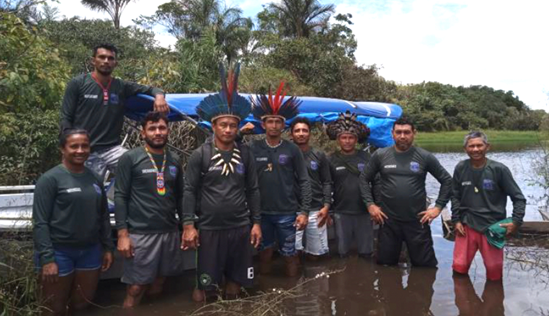
Water Guardians from Marituba in front of their new speedboat.
  • We have Forest Guardians trained and operating in 13 Indigenous territories across 3 Brazilian States with over 1,000,000 Hectares of Rainforest and Cerrado under protection.
  • We launched Water Guardian groups in two Indigenous territories in the Lower Tapajós who protect over 168km of under threat coastline.
  • We have been selected by the UN as preferred partner and will be featured as their headline success story in the World Wildlife Crime Report 2026.
  • Our 500,000-euro Green Energy Fund created in partnership with Greenchoice has funded multiple community installations and a successful capacity building program with UFOPA (Federal University of Western Pará)
Dadá with Jaap de Hoop Scheffer, the former Dutch Minister for State and Secretary General of NATO.
  • Launch of 3 economic development pilots. Including an innovative syntropic regenerative agriculture exchange program.
  • Supported the Caravana da Resposta (Answer Caravan) which brought over 300 Indigenous leaders to COP30 in Belem
  • Finished filming our latest short film ‘Surara’ which will be released in 2026
  • Dadá was recognised as the 5th winner and laureate of the acclaimed Prix Voltaire award for ‘Friendly Fights for Future Fundamentals’.
  • Launched Purpose. A functional Amazonian superfruit drink that will directly fund our guardian program

See the full: Impact Report 2025
We welcome any questions, ideas or suggestions you may have.

Surara (We are warriors) … Remember you don’t have to be in the forest to join the fight!

Forest Guardians group formed in Cobra Grande

Successful formation new forest guardians group

This July we supported the successful formation of another group of forest guardians. The training involved 3 Indigenous groups: Arapiun, Jaraqui and Tapajo and was carried out in the Cobra Grande, meaning Big Snake, Indigenous Territory. The people of this area are faced with invaders interested in planting soybeans, raising cattle, illegally extracting timber, and engaging in predatory hunting and fishing. Now that the formation of a local group of forest guardians is complete, the Indigenous people in the area now have more tools and knowledge to protect their lands from illegal invaders.


Training new forest guardians

The training was led by the Treesistance Head of Forest Guardians program Chief Dadá Borari and selected members of the Maró Indigenous Territory and was made possible by the Dutch law firm Synergy Business Lawyers, who sponsored the formation. More than 50 individuals were successfully trained and are already working in the field.

The training included discussions on safe confrontation techniques, presentations on territorial defense and using technology in the field. Skills that are unfortunately a necessity in an area that has had a troubled history with non-indigenous people trying to exploit their land at the cost of the environment and the Indigenous People that try to defend it.

Group training forest guardians: using technology in the field.


Threats to the Cobra Grande Indigenous Territory and People

The Cobra Grande Indigenous Territory is located in the municipality of Santarem, on the banks of the Arapiun River. This river springs from the Tapajos and Amazon river. For more than 20 years FUNAI (National Indian Foundation Brazil) has been working to demarcate the territory. Unfortunately due to circumstances like missing cartographic and land studies the process has taken longer than hoped. Due to this delay in demarcating their lands, the people of the Cobra Grande Indigenous Territory are faced with numerous invaders. This caused many conflicts between indigenous and non-indigenous people. So much so that cases of violence and discrimination against indigenous people led the Federal Public Prosecutor’s Office to request that an investigation be opened by the Federal Police.*

Another problem faced by the indigenous people, with the delay in demarcation, was the creation of an agro-extractive settlement by INCRA – National Institute of Colonization and Agrarian Reform, which overlaps their lands. But thankfully that issue is resolved with the delimitation of the Cobra Grande TI, which has 8,906 hectares on the left bank of the lower course of the Arapiuns River.

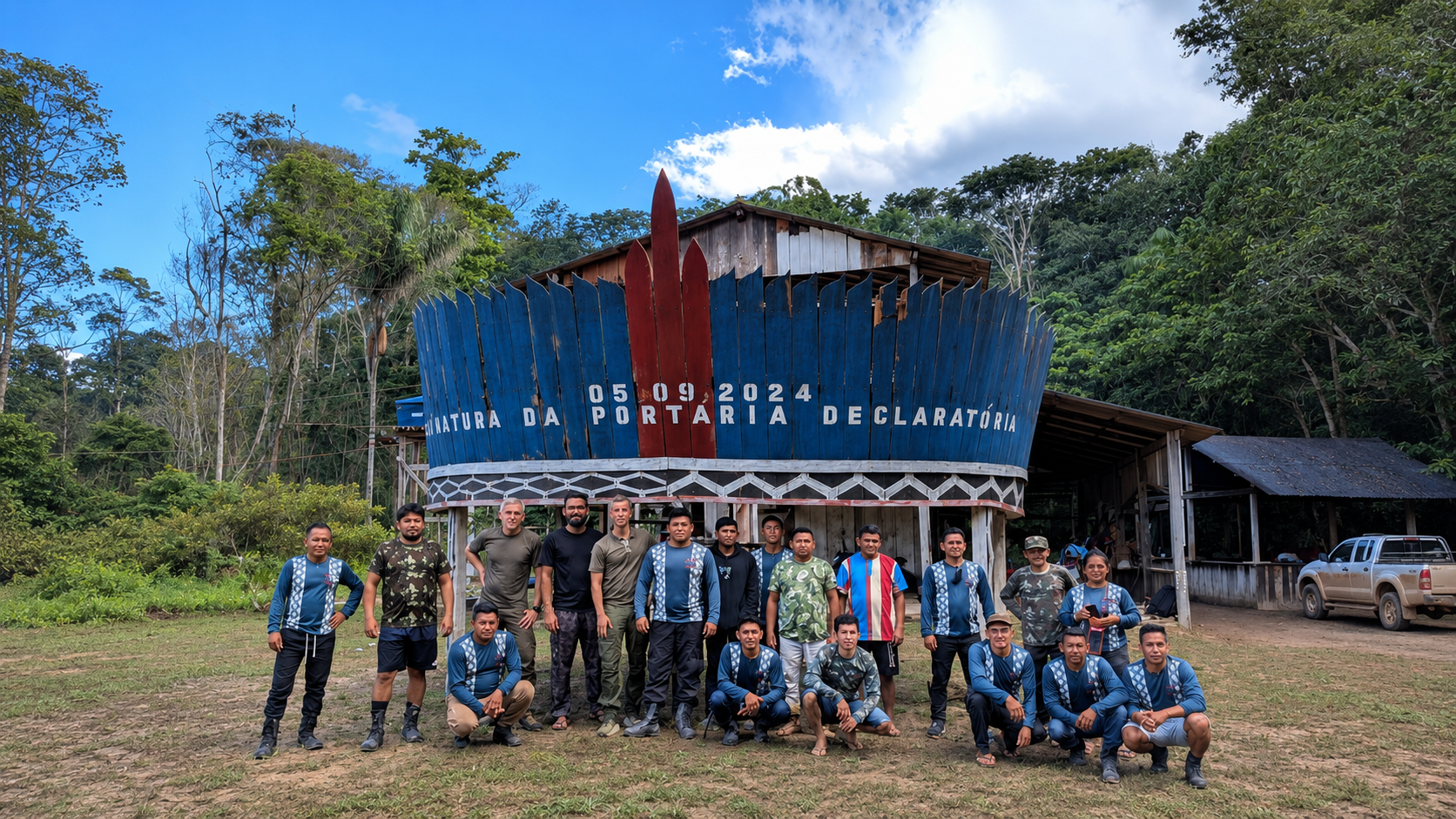
*Update – On September 5th 2024, the Ministry of Justice signed a decree to formally recognize the Cobra Grande Indigenous Territory


Welcome and specials thanks

We welcome the new group of forest guardians and wish them lots of strength and wisdom in the challenges that they face. Also we would like to give a special thanks to the Dutch law firm Synergy Business Lawyers for sponsoring this formation.

Formation of Kumaruara Guardians Group

After a successful training the Kumaruara people now have their own group of forest guardians. Thus ensuring their lands situated on the banks of the Tapajós river are patrolled and protected from illegal activities. Chief Dadá Borari (the Head of the Treesistance Forest Guardians program) led the training and this was made possible, thanks to the financial support of New York-based investigations company Illume Investigations.

In collaboration with the Mapirizinho Community, Chief Dadá and selected members of the Maró Indigenous Territory trained upwards of 20 individuals. The group of new forest guardians consists of men and women of all ages. During their lessons they learned the ins and outs of territorial defense. Secondly map creation and field work, using mobile phones and GPS cameras. And lastly safe confrontation techniques are discussed extensively during the training days. As this is a very important aspect of the work of forest guardians.

Kumaruara people: key players in regional Indigenous resistance

The Kumaruara people live on the banks of the Tapajos river and are overall known protagonists in the Indigenous resistance in the region. As they are resourceful and passionate in protecting Indigenous territories. One of their leaders actually hit headline news and went viral on social media by protesting a huge railroad. Leader Naldinho Kumaruara, from the Solimões village, painted the faces of the people present with annatto paint. Watch the the video of indigenous leader Naldinho Kumaruara. The railroad is planned to cross threw multiple Indigenous territories. If this plan succeeds, it will make it even easier to illegally extract and transport materials out of the area.

Legal protection of Indigenous lands

Additionally to actively protesting threats to the precious nature of the Amazon. The Kumaruara people also protect their lands and culture in different ways. For example they launched their Free, Prior and Informed consent (FPIC) consultation protocol. A very important legal right won by Indigenous peoples, that contributes to protecting their culture, customs and autonomy. With a FPIC governments cannot simply implement a policy or program on or concerning Indigenous Peoples’ lands. They first have to have the consent from the Indigenous community. This also includes any state policy or program, seeking to grant permission to a company to conduct any activity on such lands. 

Evidently the Kumaruara forest guardians group is a fantastic and essential addition to the existing multidisciplinary efforts. In order to protect the invaluable nature on their lands from illegal invaders and harmful activities.

Welcome and specials thanks

We welcome and thank the new group of forest guardians. Wishing them lots of strength and wisdom in the challenges that they face, in protecting a large and vital area of primary rainforest on behalf of us all. Also a special thanks to the New York-based investigations company Illume Investigations, for sponsoring this formation.

0

Newsletter
Sign Up

You don’t have to be in the forest to join the fight.