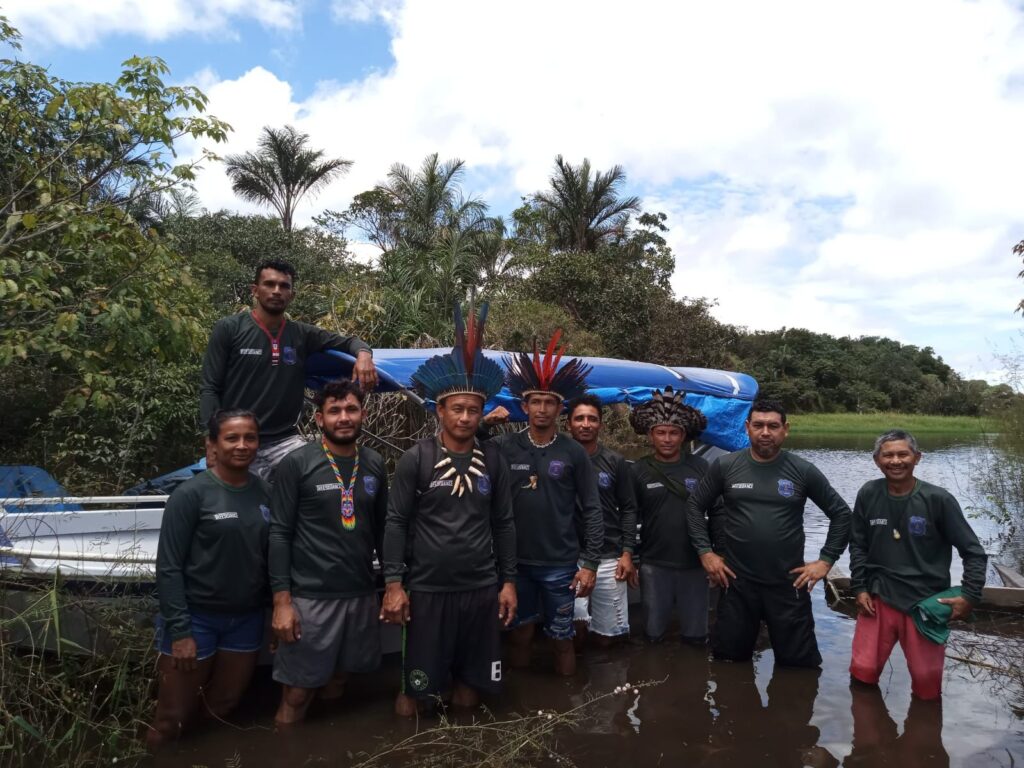
The Water Guardians Program is An Indigenous-Led Model of Water Protection focused on protecting rivers, springs, lakes, and sacred waterways within Indigenous territories of the Amazon. Through listening processes led by elders, leaders, women, and youth, each group defined its own priorities for water protection. Treesistance’s role is to walk alongside these processes, providing training, equipment, and institutional support while respecting Indigenous governance and decision-making.
For Indigenous peoples of the Tapajós region, water is not a resource – it is a living being. Rivers hold memory, springs carry spirit, and waterways sustain cultural, physical, and spiritual life. Protecting water is therefore an act of care, resistance, and continuity across generations. Launched as a pilot in 2024–2025, the Water Guardians program strengthens community autonomy by supporting Indigenous groups to monitor, defend, and manage their waters using a combination of ancestral knowledge, territorial presence, and appropriate technology.
supported by:
What the Water Guardians Do
Water Guardians are trained and equipped to:
Monitor rivers, lakes, springs, and waterways for environmental threats
Conduct patrols by boat and canoe
Document violations through photography, video, GPS mapping, and drones
Integrate traditional ecological knowledge with modern monitoring tools
Mobilize communities around the care and recovery of water sources
Support advocacy and legal action in defence of Indigenous waters
The Water Guardians Program is closely connected to Treesistance’s Forest Guardians network, forming part of a wider Indigenous-led territorial defence system that recognizes forests and waters as inseparable.
Timeline
2023
Model co-created with Indigenous Partners in the National Tapajós Forest
2024
Concept won an award by Oceanlove, as innovative and effective approach to protecting rivers in the Amazon
2025
Funds raised and pilot launched. Two water guardian groups formed in TI Takuara and TI Bragança / Marituba
2026
3rd Water Guardians group formed in TI Kumaruara
IMPACT and future plans
Achievements
Since its launch, the Water Guardians Program has delivered tangible protection outcomes while strengthening Indigenous autonomy over water territories.
In the Takuara Indigenous Territory, Water Guardians mapped and restored threatened springs, monitored the Tapajós River, and confronted illegal dredging activities. These actions resulted in formal complaints and direct enforcement responses from public authorities, leading to the interruption of illegal operations.
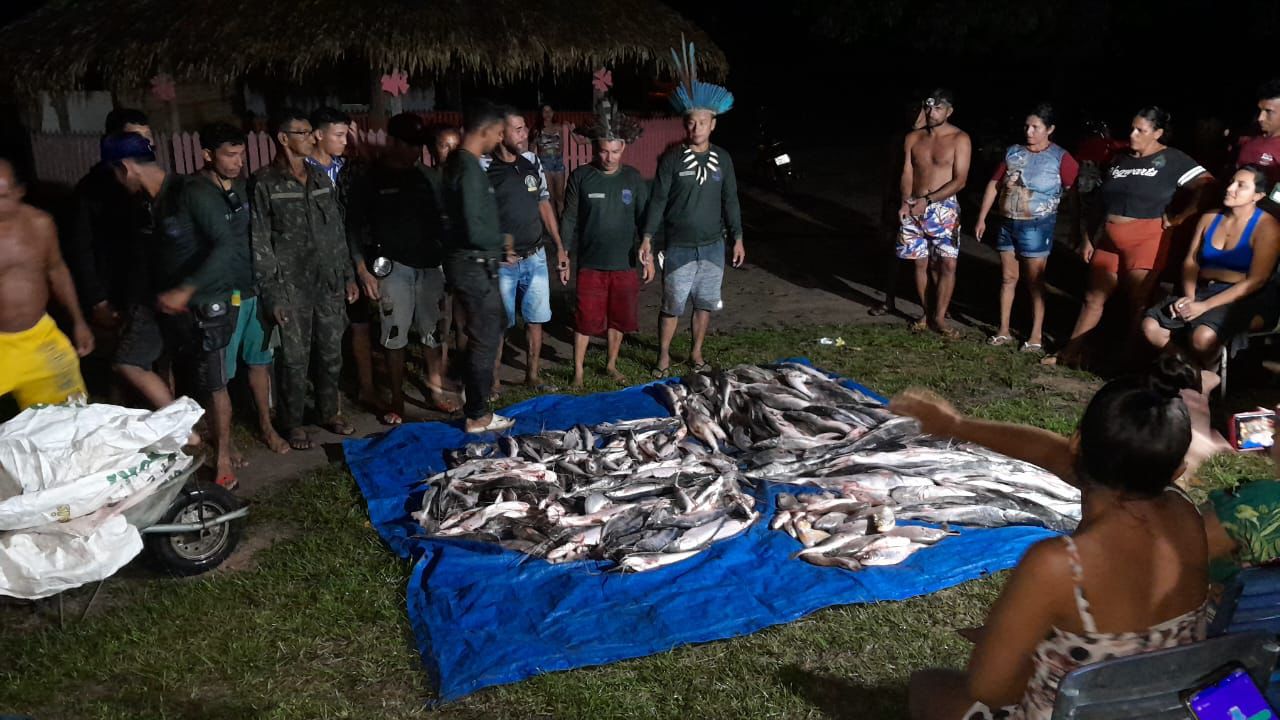
In the Bragança and Marituba Indigenous Territories, guardians focused on confronting predatory fishing, organizing daytime and night patrols, documenting invasions, and engaging environmental and federal agencies to address systemic failures in oversight. Their presence has strengthened territorial control and reduced incursions in highly pressured waterways.
Across both territories, Water Guardians currently protect over 168 kilometres of under-threat riverbanks and waterways, safeguarding critical aquatic ecosystems that sustain Indigenous communities and the wider Amazon basin.
Building a Network of Care and Defense
Beyond field action, the program emphasizes:
Intergenerational knowledge exchange, with elders and youth working side by side
Leadership development, particularly among young people and women
Communication and storytelling, enabling guardians to document and share their realities
Inter-territorial solidarity, strengthening relationships between neighbouring Indigenous peoples
Looking Ahead
Following the success of the pilot phase, Treesistance is working with Indigenous partners to:
Expand the Water Guardians program to new territories
Consolidate a regional Water Guardians Network
Develop community-defined water protection protocols
Strengthen safety, communication, and monitoring infrastructure
Produce documentary and advocacy materials led by the guardians themselves
The Water Guardians Program affirms a simple truth: when water is protected, life continues for Indigenous communities, for the forest, and for all who depend on the Amazon.