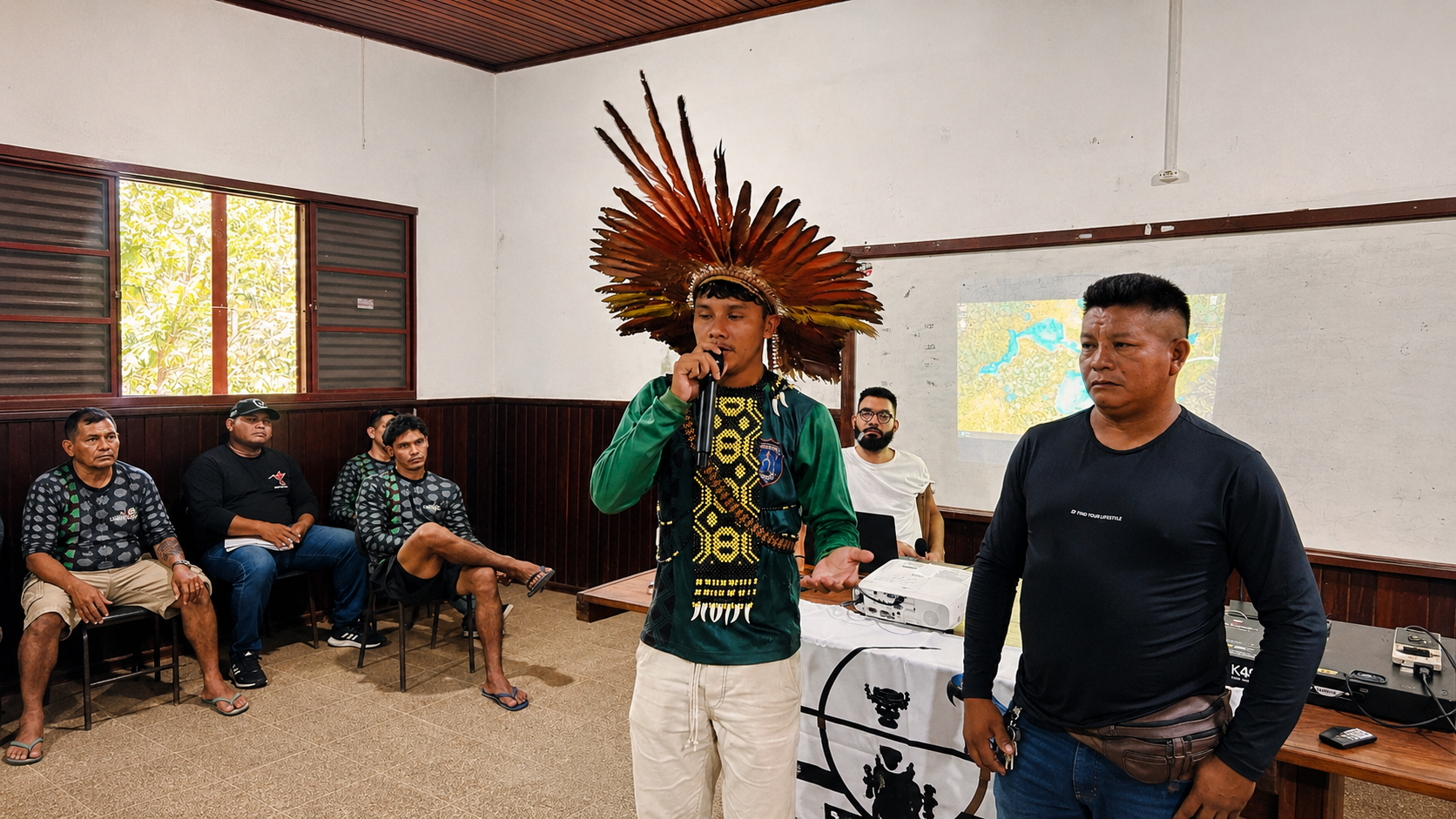
In May, something quietly significant happened in Santarém, Pará.
Nine Guardian groups from across the Lower Tapajós gathered with Xavante representatives who had travelled from Mato Grosso. Together, the participating communities defend more than one million hectares of forest and Indigenous territory.
Organised by Treesistance and CITA, the Indigenous Council of the Lower Tapajós and Arapiuns, the two-day meeting created space for Guardian groups to learn from one another and strengthen their direct relationship with the public institutions responsible for acting on environmental crime.
Learning across territories
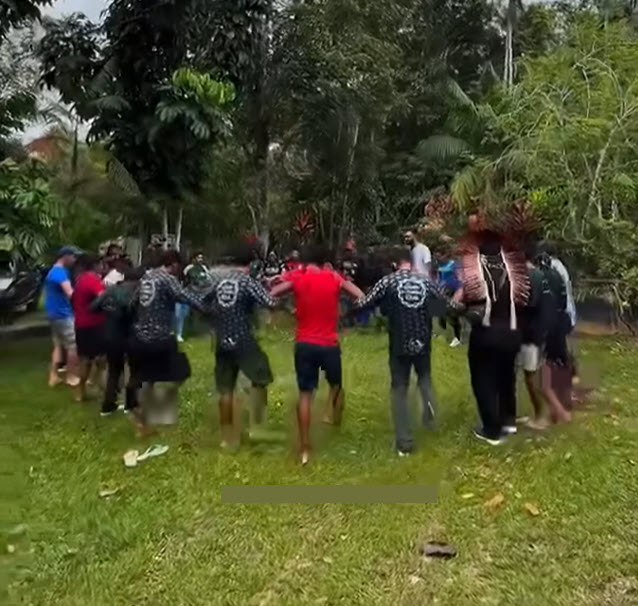
The first day focused on exchange between the Guardian groups.
Although every territory faces its own circumstances, many of the challenges are shared: illegal logging, mining, land grabbing and the immense practical difficulty of monitoring large and remote areas with limited resources.
The Guardians discussed the threats they encounter, the strategies they have developed and the lessons learned through years of work in the field. By bringing groups from Pará and Mato Grosso together, the meeting allowed experiences from one territory to inform the work of another.
It also helped map shared priorities and identify where stronger coordination between Guardian groups could make their work more effective.
Bringing evidence to authorities
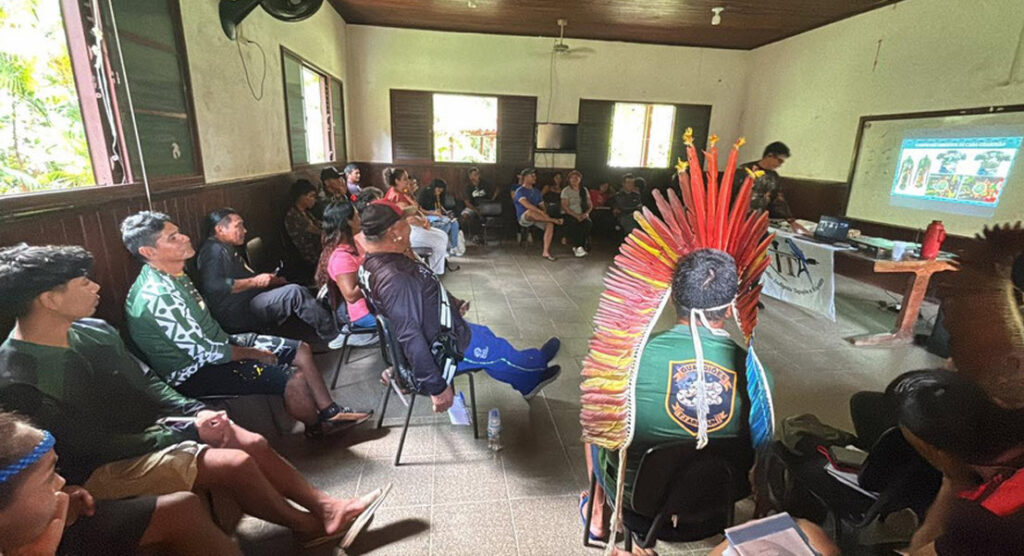
On the second day, the focus moved from peer exchange to institutional action. The full group met with representatives of the Pará State Public Prosecutor’s Office in Santarém to discuss how communities and prosecutors could work together more structurally.
The conversation explored how evidence of environmental crimes can be delivered, which legal mechanisms can be activated and what ongoing coordination between Guardian groups and public authorities could look like.
This is crucial because Guardian groups generate information that public institutions need. Through patrols, territorial knowledge and careful documentation, they record activity that may otherwise remain unseen: incursions into the forest, illegal extraction and changes occurring far from formal oversight.
But evidence only has an impact when there is a clear route for it to reach the right institution, and when that institution is able to act.
Making Guardian evidence count
Presentations by the Maró and Takuara Guardian groups helped demonstrate the scale and sophistication of the work already taking place across the region.
Several institutional representatives acknowledged that they had not previously understood the full scope of what the Guardian groups and their partners had developed.
The meeting made a concrete case: Indigenous and community-led Guardian groups do not simply report isolated incidents. They generate territorial intelligence that can support investigations, enforcement and legal action.
For Treesistance, this connection between monitoring in the forest and access to justice is fundamental. Supporting Guardians with equipment and training is essential, but their documentation must reach institutions that can respond.
A collective commitment
The gathering led to more than an exchange of ideas.
All participating coordinators signed a collective manifesto recognising Guardian groups as legitimate and autonomous community organisations committed to defending life, forests and the collective rights of Indigenous and traditional peoples.
The manifesto also highlighted a difficult reality: Guardian groups frequently carry out work that should be supported and guaranteed by the Brazilian state, yet they often operate without adequate institutional backing.
Their request was direct: legal, institutional and political recognition, together with permanent mechanisms for cooperation between communities, public authorities and partners committed to socio-environmental justice.
From individual groups to movement
This gathering represents an important step towards something Treesistance has been working to build for years: not only a network of Guardian groups, but a coordinated movement with the relationships needed to make community-generated evidence count.
There is still work ahead, particularly in strengthening communication and coordination between groups. But the direction is clear, and the meeting showed that there is institutional support for taking the next steps.
When Guardian groups learn from one another, speak collectively and establish direct routes to justice, their work becomes stronger and their evidence more likely to lead to action.
For donors and partners, supporting this process means investing in more than individual patrols or pieces of equipment. It means helping build the long-term structures through which Indigenous communities can protect their territories, document environmental crime and ensure that their evidence leads to action. It also means standing behind the people who return to the forest, day after day, to protect the land their communities depend on.